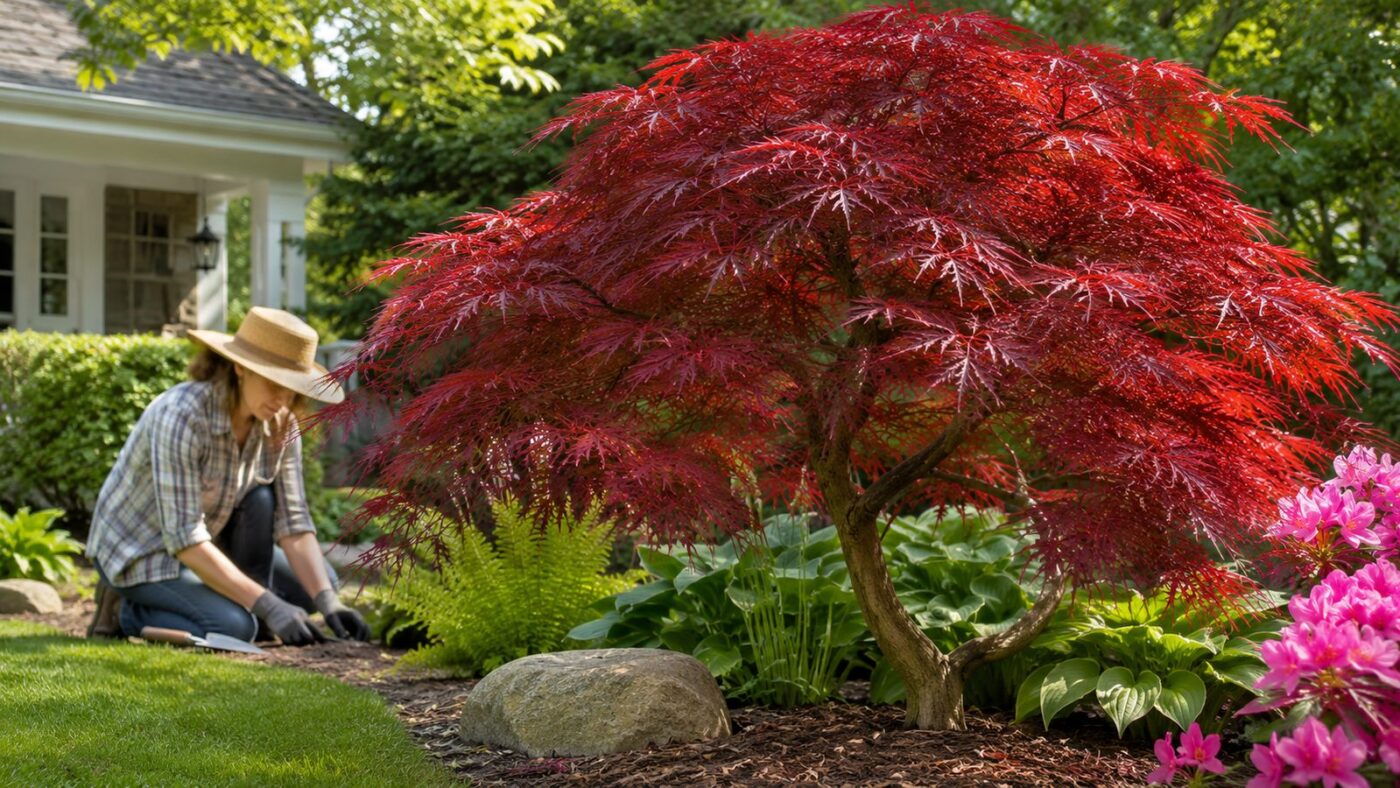
The Red Dragon Japanese Maple is a compact laceleaf tree known for rich red foliage and graceful cascading branches. It suits small yards, patios, woodland borders, and carefully managed containers across much of the United States. Proper siting matters because heat, dry soil, and strong wind can damage its delicate leaves. This cultivar grows slowly and usually remains much smaller than many standard shade trees. Its leaves emerge bright red, deepen toward burgundy, then become brilliant scarlet during fall. Gardeners value that combination of manageable size, seasonal color, and sculptural form.
| Key Fact | Details |
|---|---|
| Botanical name | Acer palmatum ‘Red Dragon’ |
| Plant type | Deciduous laceleaf Japanese maple |
| Typical mature height | About 6–8 feet, sometimes larger |
| Typical spread | About 6–8 feet or wider |
| USDA hardiness | Generally Zones 5–8 |
| Growth habit | Compact, mounded, cascading |
| Growth rate | Slow |
| Best light | Morning sun with afternoon shade in hotter regions |
| Soil | Moist, fertile, well-drained soil |
| Water needs | Regular moisture without waterlogging |
| Fall color | Scarlet to crimson |
| Good uses | Specimen tree, patio planting, container, rock garden |
Direct answer: Red Dragon grows best in moist, well-drained soil with shelter from harsh wind. Morning sunlight and afternoon shade work especially well in warmer U.S. climates. Keep young trees evenly watered, mulch their root zones, and avoid heavy pruning. Mature plants generally form compact, cascading specimens.
Key Takeaways
* Red Dragon generally performs best within USDA Zones 5 through 8. * Expect a compact, spreading tree rather than a tall shade tree. * Morning sun helps foliage color while afternoon shade reduces scorch risk. * Consistent soil moisture matters most during establishment and hot weather. * Wind protection helps prevent browned or dried leaf edges. * Containers work well when drainage and watering receive close attention. * Heavy pruning is unnecessary and may spoil the natural cascading shape.
What Makes This Laceleaf Maple Different?
Red Dragon belongs to the dissectum group of Japanese maples. These trees have deeply divided leaves that create a fine, feathery appearance. The branches also arch downward, producing a broad and softly cascading silhouette. Spring foliage usually begins in bright scarlet or reddish tones. Leaves develop deeper burgundy or purple-red coloring as the growing season progresses. Cooler autumn conditions then bring another strong display of scarlet or crimson. Its ability to retain dark foliage through summer helps distinguish this cultivar from many similar red laceleaf selections. J. Frank Schmidt describes its summer foliage as darker than Crimson Queen. That trait makes it attractive where sustained seasonal color matters.
How Large Does Red Dragon Grow?
Mature size varies with climate, growing conditions, training, and the individual nursery plant. Major horticultural references commonly describe a compact tree around six to eight feet tall. Some nursery-grown specimens can eventually become wider or somewhat taller. The plant usually develops slowly rather than filling a space within several seasons. This slower pace makes planning easier around patios, walkways, foundations, and smaller garden beds. It also means buyers should not expect fast screening or quick shade. Allow enough horizontal room for the cascading canopy to develop naturally. Crowding the branches against walls or larger shrubs can hide the tree’s form. Open space also improves air movement around the foliage.
How Much Sun Does It Need?
Light requirements depend strongly on regional summer heat. Northern gardeners can often provide more direct sunlight when soil remains consistently moist. Southern and hotter inland locations usually benefit from afternoon protection. Morning sun followed by light afternoon shade is a dependable starting point. It provides useful light without exposing foliage to the strongest late-day heat. The Royal Horticultural Society also notes that excessive exposure can contribute to leaf scorch. Avoid placing the tree beside highly reflective walls, pavement, or heat-storing surfaces. Those locations can raise leaf temperatures and dry the surrounding soil faster. A sheltered eastern exposure often provides a better balance.
How to Care for a Red Dragon Japanese Maple
Successful care begins with a suitable planting location rather than frequent intervention. Choose a sheltered place with good drainage and enough space for the canopy. Correct placement reduces later problems involving scorch, drought stress, and awkward pruning. Planting depth also matters because roots need oxygen near the soil surface. Keep the root flare visible instead of burying the trunk beneath excess soil. Deep planting can contribute to poor establishment and root problems. After planting, water deeply enough to moisten the root zone. Check moisture regularly during the first growing seasons instead of following a rigid calendar. Weather, soil texture, and drainage determine how quickly the site dries.
Soil and Mulch Requirements
A moisture-retentive but well-drained soil provides the strongest foundation. Organic matter can improve difficult soil when used appropriately throughout the planting area. Avoid creating a small pocket of unusually rich soil surrounded by poorly draining ground. Japanese maples generally tolerate several soil types when drainage remains adequate. Constantly saturated soil is more dangerous than slightly imperfect soil texture. Root decline can develop when air remains excluded from wet ground. Apply a modest mulch layer over the root zone to reduce moisture loss. Keep mulch away from direct contact with the trunk and root flare. That spacing discourages excess moisture around bark and reduces hiding places for pests.
Watering Without Creating Root Problems
New trees need closer moisture monitoring because their root systems occupy limited soil volume. Water thoroughly when the root zone begins drying instead of giving frequent shallow sprinkles. Deep watering encourages moisture to reach more of the developing roots. Established trees still need help during prolonged heat or drought. Laceleaf foliage has a large exposed surface and can lose moisture quickly. Container plants require even closer attention because pots dry faster than garden soil. Avoid keeping soil permanently saturated in an effort to prevent leaf scorch. Scorched leaves can result from heat, wind, or moisture stress rather than simple thirst. Improving the site may solve more than increasing irrigation.
Should You Fertilize It?
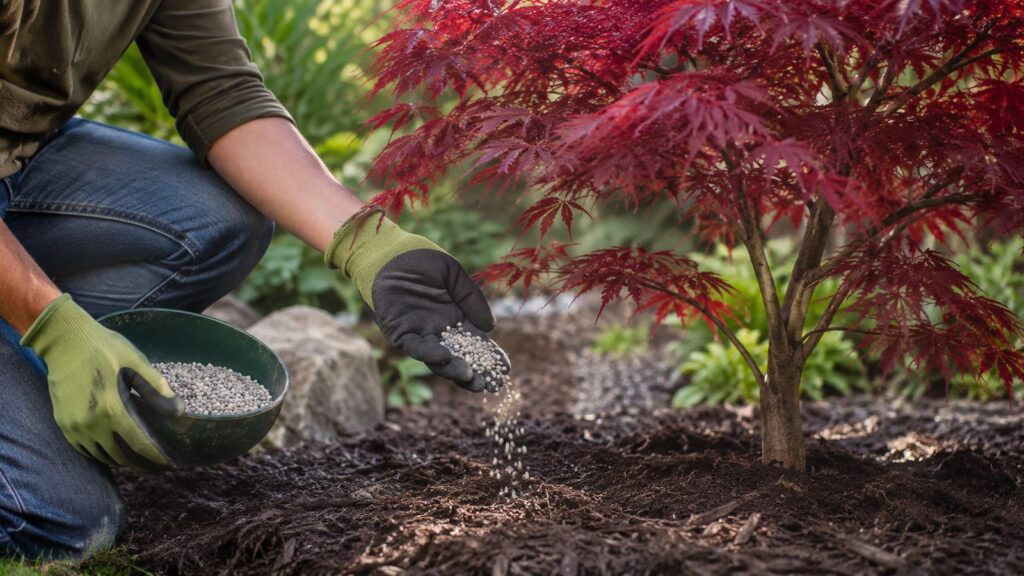
Heavy feeding is rarely needed for a healthy specimen growing in suitable soil. Excess nitrogen can encourage soft growth that may be less attractive or more vulnerable. Fertilizer should respond to an identified need rather than become an automatic routine. If growth appears weak, first review drainage, watering, light, and planting depth. Those problems cannot be corrected with extra fertilizer. A soil test can also reveal nutrient or pH concerns before treatment begins. When fertilizer is warranted, use an appropriate landscape-tree product according to its label. Avoid applying more because growth seems slow. Slow development is a normal characteristic of this cultivar.
Pruning and Training
Red Dragon naturally develops an attractive layered and cascading form. Routine pruning should focus on dead, damaged, crossing, or badly placed branches. Removing excessive growth can destroy the architecture that makes the tree distinctive. Late autumn through winter is commonly recommended for necessary structural pruning. Avoid major cuts unless there is a clear reason. Light corrective work is usually enough for an established ornamental tree. Also watch for vigorous shoots emerging from below the graft union. These shoots come from the rootstock rather than the selected cultivar. Remove them at their origin before they compete with the desired canopy.
Growing Red Dragon in a Container
Its compact habit makes Red Dragon useful for patios and container gardens. Choose a substantial container with several reliable drainage openings. A stable pot also reduces the chance of tipping as the canopy expands. Container soil should drain freely while retaining enough moisture between waterings. Check pots frequently during hot summer conditions because roots have limited access to surrounding moisture. Never leave the container standing continuously in collected water. Winter care depends on local temperatures because exposed roots experience colder conditions than planted roots. Gardeners near the colder edge of its range may need extra protection. A protected location can reduce freezing stress and damaging winter wind. For more ideas related to outdoor projects and property care, NewsParq’s guide to weather-resistant outdoor structures may help when planning sheltered garden areas. Its piece on backyard design and aesthetics also covers outdoor design considerations.
Common Problems and Warning Signs
Brown leaf margins often point toward heat, drought, wind, or excessive exposure. They do not automatically mean the tree has a serious disease. Review sunlight, soil moisture, reflected heat, and wind before applying treatments. Poor drainage can create more serious long-term problems around the roots. Symptoms may include weak growth, declining branches, or foliage that wilts despite wet soil. Correcting drainage is more useful than repeatedly adding water. Japanese maples can also encounter aphids, scale insects, mites, fungal diseases, and Verticillium wilt. Healthy growing conditions reduce many stress-related problems but cannot prevent every pest or disease. Persistent dieback deserves closer diagnosis before pruning or chemical treatment.
Best Places to Use It in a U.S. Landscape
This tree works well as a focal point where viewers can appreciate its shape from several directions. Small front yards, courtyard beds, patios, and woodland edges are common choices. Its modest height allows placement where a larger shade maple would overwhelm the space. Consider background color before selecting the final location. Dark burgundy leaves can disappear against deep evergreen foliage or shaded walls. Lighter stone, green groundcovers, and pale structures can create stronger visual contrast. The tree also pairs well with plants that prefer similar moisture and light conditions. Avoid companions that demand constant saturated soil or aggressive cultivation around the roots. Simple planting schemes often showcase the maple more effectively.
Is Red Dragon Worth Growing?
Red Dragon is a strong choice for gardeners wanting intense foliage color without planting a large tree. Its slow growth and compact form suit landscapes where space is limited. The cascading canopy also provides interest after leaves disappear. The main tradeoff is sensitivity to harsh exposure. Hot afternoon sun, drought, reflected heat, and drying winds can damage the finely cut leaves. Choosing the correct location is more important than relying on frequent maintenance later. Gardeners who can provide sheltered light and steady moisture will usually get the best appearance. Those with extremely hot, exposed sites may need a tougher plant. Matching the cultivar to the location remains the simplest route to success.
Frequently Asked Questions
How fast does a Red Dragon Japanese Maple grow?
This cultivar grows slowly compared with many landscape trees. Nursery references commonly describe annual growth in only several inches under typical conditions. Climate, soil, water, root health, and plant age can change the yearly rate.
Can Red Dragon take full sun?
It can tolerate considerable sun in cooler regions with reliable soil moisture. Hotter U.S. areas usually benefit from shade during the strongest afternoon sunlight. Too much heat and exposure can produce browned or scorched leaf margins.
How tall does Red Dragon get?
Many established specimens finish near six to eight feet tall. Some can become larger over many years under favorable conditions. The canopy may become as wide as the tree is tall, or wider.
Can it grow in a pot?
Yes, its compact size and ornamental shape make container growing practical. The pot needs excellent drainage and enough room for developing roots. Watering requires closer attention because container soil loses moisture quickly.
Why are the leaves turning brown?
Brown edges commonly reflect heat, drought, drying wind, or excessive sun exposure. Check soil moisture and site conditions before assuming insects or disease caused the damage. Persistent branch decline may require a closer inspection for root or vascular problems.
When should it be pruned?
Prune only when necessary because the natural form provides much of the tree’s appeal. Late autumn through winter is commonly preferred for structural work. Remove dead, damaged, crossing, or rootstock growth rather than heavily reshaping the canopy.
Final Growing Advice
Start by choosing the planting site carefully because location influences nearly every later care decision. Give the tree well-drained soil, dependable moisture, and shelter from harsh afternoon conditions. Those basics reduce the need for complicated treatments. Allow the canopy to develop without frequent cutting or excessive feeding. Watch soil moisture during establishment and during unusually hot weather. With thoughtful placement, this compact maple can provide strong color and structure for many growing seasons. —