If you are planning life with one of these large, affectionate cats, expect a long commitment. The Maine Coon lifespan is commonly described as roughly 10 to 15 years. Individual cats can live shorter or longer lives, depending on genetics, health, weight, and care.
Quick answer: Many breed guides place these cats around 12.5 years or longer. A 10–15 year range is often used for planning. A 2024 UK veterinary study estimated 9.71 years at birth for the breed. That lower study figure reflects a specific population and method, not a deadline for your cat.
| Question | Useful answer |
|---|---|
| Common planning range | About 10–15 years |
| TICA breed profile | 12.5+ years |
| 2024 UK life-table estimate | 9.71 years at birth, based on 69 recorded deaths |
| Senior life stage | Older than 10 years under AAHA/AAFP guidance |
| Key inherited concern | Hypertrophic cardiomyopathy, or HCM |
| Other concerns | Hip dysplasia, excess weight, and age-related illness |
| Owner priorities | Healthy body condition, preventive care, safe housing, and early attention to changes |
Table sources: TICA, the 2024 VetCompass life-table study, AAHA/AAFP guidance, and UC Davis.
Key Takeaways
- A useful planning range is about 10–15 years, but no range predicts one individual cat.
- A 2024 UK study reported a lower life expectancy at birth of 9.71 years for this breed.
- Heart screening, weight control, veterinary care, and a safer lifestyle can support healthier aging.
- AAHA and AAFP classify cats older than 10 years as senior.
What the Maine Coon Lifespan Numbers Really Mean
The International Cat Association lists a life expectancy of 12.5 years or longer for the breed. TICA also notes that these cats often reach full physical maturity around four years. That slow development can make their long kitten-like phase feel different from that of smaller breeds.
A 2024 life-table study in the Journal of Feline Medicine and Surgery analyzed 7,936 confirmed cat deaths from UK primary-care practices. For this breed, researchers estimated 9.71 years at birth from 69 recorded deaths. The confidence interval was 8.42 to 11.00 years, which shows meaningful statistical uncertainty.
Those figures answer different questions, so they should not be blended into one precise average. TICA provides a general breed profile, while the study estimates population life expectancy from veterinary records. The study used UK cats, so U.S. owners should not treat 9.71 years as a personal forecast.
Health Factors That Can Affect Longevity
Hypertrophic cardiomyopathy deserves special attention
Hypertrophic cardiomyopathy, or HCM, is a major inherited concern in Maine Coon cats. UC Davis identifies a breed-associated MYBPC3 mutation linked with higher HCM risk in the breed. Cats with two copies can develop serious cardiac disease at a young age. A 2011 study in Acta Veterinaria Scandinavica screened 332 Maine Coons, most younger than four years, and found HCM in 6.3 percent.
Genetic testing helps estimate risk, but it cannot rule out every case of HCM. ACVIM guidance notes that mutation-negative cats can still develop the disease. Breeders and owners should discuss genetic results and echocardiographic screening with a veterinarian.
Weight and joint health matter
Cornell reports that hip dysplasia appears more common in certain breeds, including these large cats. Excess body weight can increase stress on the hip structures and worsen mobility problems. A lean body condition can make movement easier and reduce avoidable joint strain.
Use body condition and weight trends instead of chasing one breed-average number. Large frames can make a healthy cat look heavier than a typical domestic shorthair. NewsParq’s 6-month-old kitten guide explains why growth patterns and body condition matter more than one target weight.
Lifestyle and preventive care shape healthy years
A controlled home environment makes eating, litter habits, activity, and behavior easier to monitor. It also limits exposure to hazards such as traffic, fights, and some infectious risks. Indoor cats still need climbing, play, scratching surfaces, and daily mental stimulation.
AAHA and AAFP recommend at least annual examinations for all cats. Their guidance says senior cats should be examined at least every six months. Your veterinarian may recommend a different schedule based on disease, medications, or previous findings.
When Is a Maine Coon Considered Senior?
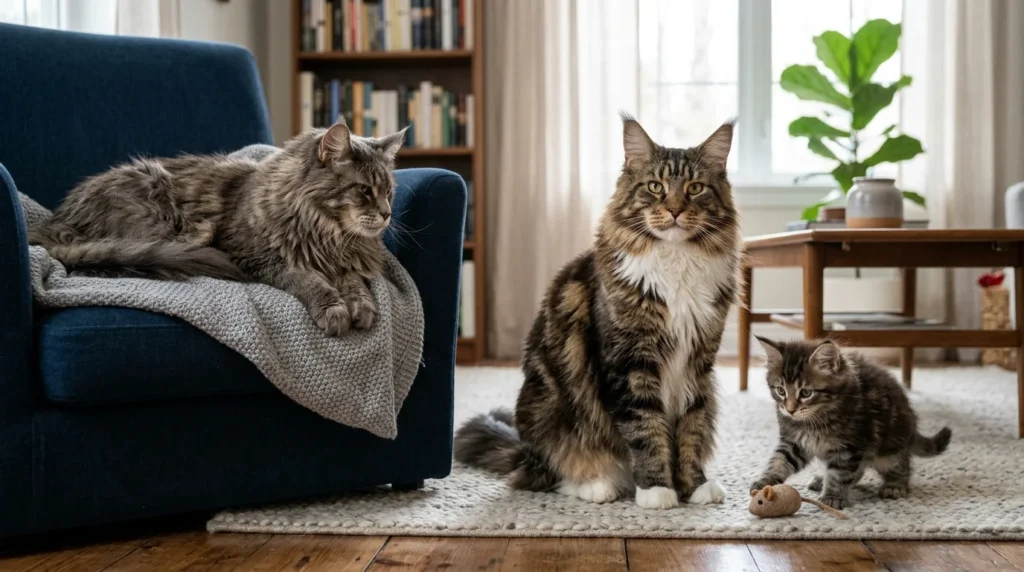
AAHA and AAFP define mature adult cats as 7 to 10 years old. They classify cats older than ten years as senior. Those age bands are starting points, because health and aging vary between individuals.
As your cat ages, watch for changes in weight, appetite, thirst, mobility, grooming, sleep, and litter habits. New breathing changes, weakness, or reduced exercise tolerance deserve prompt veterinary attention. Small changes can be easier to evaluate when you know your cat’s normal routine.
7 Practical Ways to Support a Longer, Healthier Life
- Choose health-tested breeding lines. Ask breeders about HCM genetic testing and cardiac screening practices.
- Keep your cat lean. Track body condition and adjust portions with veterinary guidance.
- Feed for the correct life stage. Use complete, balanced food that matches age and health needs.
- Build daily activity into the home. Use climbing spaces, interactive play, and food puzzles.
- Follow preventive veterinary care. Keep examinations, vaccines, parasite control, and dental care up to date.
- Make outdoor access safer. Consider a catio, harness walks, or another controlled option.
- Act on persistent changes early. Changes in appetite, breathing, mobility, or behavior can justify a veterinary call.
Consistency matters more than chasing a single longevity trick. Measured meals, regular play, and routine checkups make health trends easier to notice. For more cat-care reading, NewsParq’s Pets section collects practical guides for owners.
Can These Cats Live to 20 Years?
Yes, living past 20 is possible, but it should be treated as exceptional longevity. The 2024 UK study recorded a maximum lifespan of 21.61 years among the 69 deaths. That finding shows possibility, not a typical expectation for every cat.
Extreme age stories can be interesting, but they are poor planning tools for owners. Population estimates describe groups, while your cat’s health record describes one individual. Weight trends, cardiac findings, mobility, and routine examinations provide more useful personal context.
Frequently Asked Questions
What is the average Maine Coon lifespan?
A practical planning range is about 10 to 15 years for many owners. TICA lists breed life expectancy at 12.5 years or longer. A 2024 UK veterinary study produced a lower estimate of 9.71 years at birth.
Do indoor Maine Coons live longer?
A safer indoor or controlled-outdoor lifestyle avoids many hazards that free-roaming cats face. It also makes it easier to monitor food intake and behavior changes. No housing choice can guarantee a specific lifespan for one cat.
What health problem is most important to screen for?
HCM deserves particular attention because the breed has an associated MYBPC3 mutation. Genetic testing can identify that known variant and help estimate risk. A negative DNA result does not exclude every case, so cardiac screening may still be appropriate.
Can a Maine Coon live past 20 years?
Yes, but reaching that age is uncommon and should not be expected. The 2024 UK life-table dataset included a recorded lifespan above 21 years. Genetics, disease, body condition, and care still shape each cat’s individual course.
When should senior care start?
AAHA and AAFP classify cats older than ten years as senior. They recommend at least annual examinations for all cats and at least six-monthly visits for seniors. Your veterinarian may increase that frequency when chronic disease or medication monitoring requires it.
Plan for Healthy Years, Not a Perfect Number
Lifespan estimates help with planning, but they cannot predict your cat’s future. Focus on body condition, preventive care, heart screening, activity, and early response to changes. Those habits support quality of life at every age.
If your cat is approaching seven, ask your veterinarian what baseline monitoring makes sense now. If your cat is over ten, discuss a senior-care schedule that fits its health history. You can also browse NewsParq’s pet guides for more everyday care topics.