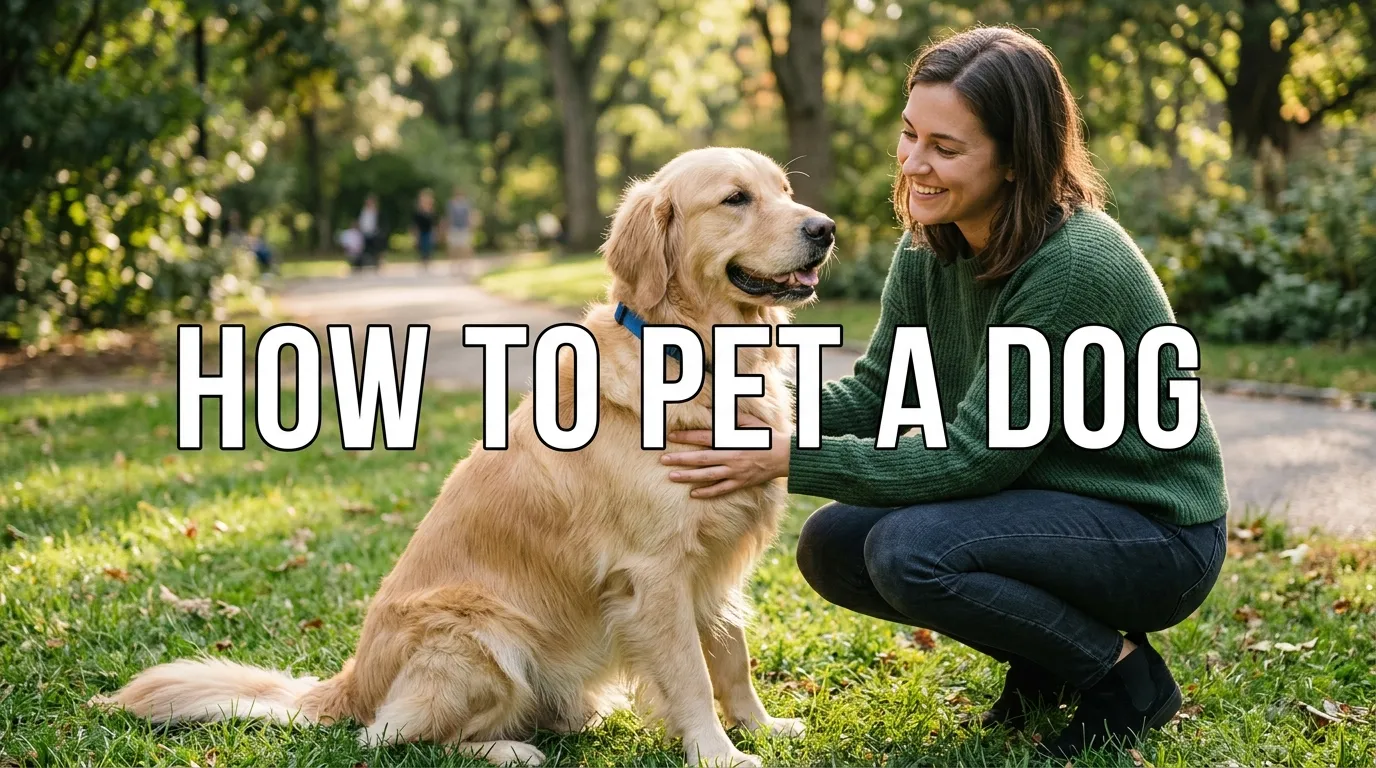
If you’re learning how to pet a dog, start by asking permission and letting the animal choose contact. Stand calmly, give the dog space, and begin near the chest or shoulder. Stop if the dog stiffens, turns away, backs up, or shows other signs of stress.
Safe petting depends more on body language than enthusiasm. A friendly appearance does not guarantee that a dog wants physical contact. The CDC notes that any dog can bite when frightened, nervous, sick, or protective.
Quick Safety Guide
| Situation | Safer choice |
|---|---|
| Unfamiliar dog | Ask the owner before approaching |
| First contact | Let the dog approach at its own pace |
| Good starting areas | Chest, shoulders, or side of the neck |
| Areas to avoid initially | Head, paws, tail, ears, belly, and face |
| Comfortable signals | Loose posture, soft eyes, voluntary approach |
| Warning signals | Stiffness, tucked tail, lip licking, backing away |
| Young children | Keep an adult actively supervising |
| Dog walks away | End the interaction immediately |
These recommendations match current CDC and ASPCA bite-prevention guidance. The CDC also says nearly one in five bitten people need medical attention. Children face a higher bite risk and can suffer more serious injuries.
Key Takeaways
- Ask the owner before touching an unfamiliar dog.
- Give the dog a chance to approach you first.
- Start with gentle contact on the chest or shoulders.
- Avoid looming, hugging, head pats, and sudden movements.
- Pause after a few seconds and see whether the dog seeks more.
- Stop immediately when the dog moves away or appears tense.
- Supervise children around dogs, including familiar family pets.
Quick Answer: The Safest Way to Start
Ask the owner first, then remain calm and let the dog approach voluntarily. Turn slightly sideways and avoid reaching over its head. Begin with gentle strokes on the chest or shoulder. Pause after a few seconds. Continue only when the dog stays relaxed and clearly seeks more contact.
What You’ll Need Before You Start
You do not need treats, special equipment, or a complicated greeting routine. You need the owner’s permission, enough space, and a few seconds to watch the animal. Patience matters because a dog should have time to decide whether interaction feels comfortable.
Learning basic canine body language also helps prevent avoidable mistakes. NewsParq readers can find more general animal-care topics in the Pets section. Petting should remain optional for the animal, even after the owner says yes.
How to Pet a Dog Safely in 7 Steps
The safest greeting gives the animal control over distance and contact. Veterinary behavior guidance recommends watching the dog before touching it. A relaxed response means more than a wagging tail alone.
- Ask the owner for permission. Do this before moving closer. Respect a no without trying to persuade the handler.
- Stay several feet away at first. Keep your movements slow and predictable. Avoid walking directly into the animal’s space.
- Turn your body slightly sideways. This position can feel less confrontational than facing the animal head-on. Avoid prolonged direct staring.
- Let the dog choose whether to approach. Remain still while it investigates you. Do not chase a dog that stays away.
- Start with the chest or shoulder. Use gentle strokes rather than heavy pats. Avoid reaching downward over the top of the head.
- Pause after a few seconds. Remove your hand and watch what happens. Moving closer or leaning toward you can invite continued contact.
- Stop when the dog disengages. Turning away, walking off, or stiffening means the interaction should end. Give the animal space without following.
This short pause is sometimes called a consent test. PetMD recommends brief contact, then withdrawing your hand to watch the response. The technique helps the dog decide whether to continue the interaction.
Read the Dog’s Body Language Before Touching
A dog that welcomes attention often has a loose body and relaxed facial muscles. Its eyes may look soft, and it may move toward you on its own. Consider these signals together rather than judging them separately.
Stress can show up in small changes before growling or snapping occurs. Watch for lip licking, crouching, flattened ears, avoidance, or a tucked tail. A stiff body or fixed stare also means you should increase distance.
| Body language | What it may mean | What you should do |
|---|---|---|
| Loose posture and soft eyes | Comfortable or curious | Allow voluntary approach |
| Leaning toward your hand | May want continued contact | Continue gently |
| Turning the head away | Uncertain or uncomfortable | Pause |
| Lip licking or crouching | Stress or anxiety | Stop and give space |
| Tucked tail | Fear or discomfort | Do not continue |
| Growling or showing teeth | Strong warning | Move away calmly |
| Stiff posture | High tension | End the interaction |
A wagging tail should not override the rest of the body. ASPCA guidance says wagging can appear alongside anxiety or threatening behavior. Look at posture, facial tension, movement, and distance together.
Where Do Dogs Usually Like Being Petted?
Many dogs accept gentle touch around the chest, shoulders, and side of the neck. PetMD also lists the area under the chin as a common starting point. Individual preferences still matter, especially with an unfamiliar animal.
Move your hand slowly and use light, steady strokes. Avoid fast tapping or rough rubbing during a first greeting. A dog that enjoys the contact may stay nearby, lean closer, or ask for attention again.
Be more cautious around these areas:
- Top of the head
- Ears
- Paws and legs
- Tail
- Lips and face
- Stomach
- Sensitive or injured areas
Some family dogs enjoy touch in those places from trusted people. That does not mean they welcome the same contact from strangers. Let each dog’s response guide the interaction.
Common Petting Mistakes to Avoid
Reaching over a dog’s head is one of the most common greeting mistakes. Looming from above can also make an unfamiliar animal uncomfortable. PetMD recommends approaching from the side and avoiding a threatening posture.
Hugging is another poor choice when greeting an unfamiliar dog. Do not disturb dogs that are eating, sleeping, hiding, or caring for puppies. The CDC specifically recommends leaving dogs alone during these situations.
Avoid these behaviors during a first interaction.
- Running toward the dog
- Bending directly over its body
- Staring continuously into its eyes
- Grabbing its collar
- Pulling its ears or tail
- Touching through fences or car windows
- Following when it tries to leave
- Continuing after growling or stiffening
A growl is useful information, not an invitation to test the animal. Stop touching and calmly create more distance. Punishing or challenging a warning can make the situation less predictable.
Should You Hold Out Your Hand for the Dog to Sniff?
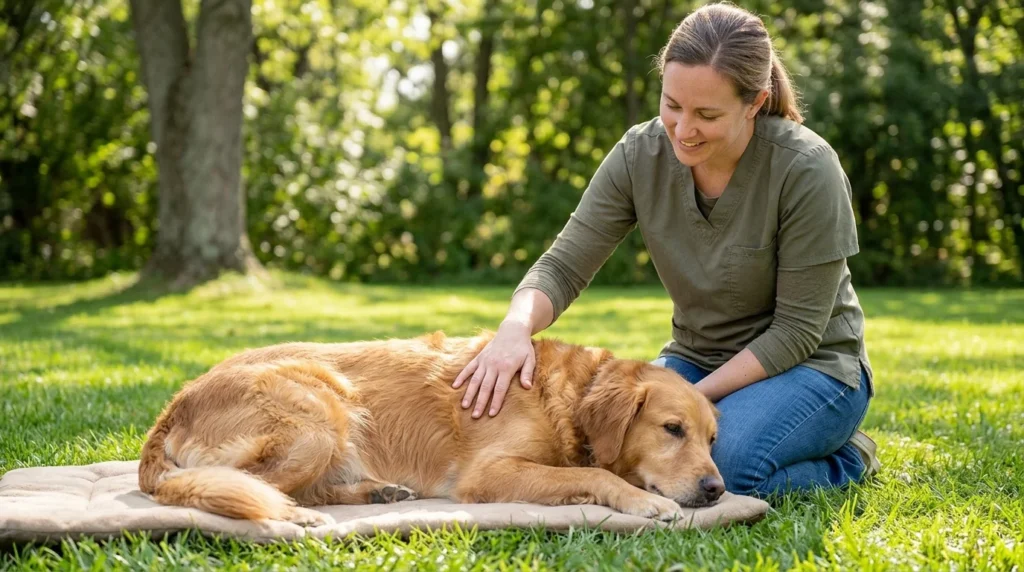
Current advice differs slightly on this familiar greeting ritual. The CDC says the dog should see and sniff you before you reach to touch it. The ASPCA also advises letting the dog sniff before you pet it.
That does not require pushing your hand toward the dog’s nose. Let the animal approach and investigate from a comfortable distance. PetMD recommends keeping your hand relaxed and low rather than placing it near the face.
This distinction makes the greeting less intrusive. The dog still gets the scent information it wants. It also keeps control over whether it closes the remaining distance.
Extra Safety Matters When Children Pet Dogs
Children should learn that owner permission is only the first permission. The dog’s behavior must also show that it welcomes contact. Adults should stay close enough to intervene throughout the interaction.
The CDC says children are more likely than adults to be bitten by dogs. Their injuries also tend to be more severe. Young children need supervision even around dogs they already know.
Teach children to use a calm voice and move slowly. They should never climb on, squeeze, chase, or corner a dog. They should also leave animals alone during meals, sleep, or quiet resting periods.
What If an Unfamiliar Dog Approaches You?
An approaching animal does not always want affection. The CDC recommends staying calm and still around an unfamiliar dog. Avoid running, screaming, or making sudden movements.
Turn your body somewhat sideways and avoid hard eye contact. Wait for the dog to move away or back away slowly yourself. Do not attempt to pet the animal if it is loose and no owner is present.
If a dog knocks you down, protect your head and neck. The CDC recommends curling into a ball and covering your ears and neck. A bag or jacket can also create a barrier.
What Should You Do After a Dog Bite?
Wash a minor bite or scratch thoroughly with soap and water. Cover the wound with a clean bandage after cleaning it. Seek medical help for serious wounds, signs of infection, or uncertain rabies vaccination status.
Apply firm pressure with a clean cloth if a deep wound bleeds. Call 911 when bleeding will not stop or the injured person feels faint. A healthcare provider can assess tetanus and possible rabies treatment needs.
Report dog bites when local authorities require it. The CDC advises contacting animal control or police, especially when vaccination status is unknown. Local requirements can differ across U.S. jurisdictions.
Petting Your Own Dog Is Different
Your own companion may accept touch that would bother an unfamiliar animal. Familiarity still does not remove the need to watch body language. Pain, illness, fear, or fatigue can change a normally social dog’s tolerance.
Changes in daily behavior can also deserve veterinary attention. Pet owners building healthy routines may find NewsParq’s guide to scheduled puppy feeding useful. Feeding, rest, exercise, handling, and health all affect daily behavior.
Don’t assume past consent guarantees future consent. A dog can enjoy chest scratches in the morning and prefer rest later. Respecting those changing preferences helps make human contact more predictable.
Frequently Asked Questions
How do I pet a dog I’ve never met?
Ask the owner first and let the animal decide whether to approach. Begin gently around the chest or shoulder if its body remains relaxed. Pause after several seconds and stop if it moves away.
Where is the safest place to start petting?
The chest and shoulders are sensible starting areas for many unfamiliar dogs. The side of the neck may also be comfortable. Don’t assume the top of the head is welcome.
Does a wagging tail always mean a dog is friendly?
No, tail movement can occur with excitement, uncertainty, or tension. Look at the entire body instead of one signal. Stiffness, avoidance, or flattened ears should make you stop.
Can children pet unfamiliar dogs?
Children can greet suitable dogs when the owner agrees and an adult closely supervises. The animal should remain relaxed and willing to interact. Children should never chase, hug, corner, or disturb a resting dog.
What if the owner says the dog is friendly?
Treat that information as useful, but still watch the animal itself. Dogs can feel differently depending on pain, stress, fatigue, or surroundings. Give the dog a chance to decline contact.
Make Every Greeting Optional
Good petting starts with patience, not reaching for the nearest friendly face. Ask, wait, observe, touch gently, and stop whenever the animal disengages. Those habits protect people while giving dogs more control over social contact.
For more animal-care reading, browse the NewsParq Pets section. Multi-pet households can also read its recent six-month-old kitten care guide. Veterinary concerns should still go to a licensed veterinarian.