
Starting a business in Ohio can be surprisingly straightforward. An LLC Ohio filing currently costs $99 through the Ohio Secretary of State. You also need an acceptable company name and an eligible statutory agent.
Ohio also has a useful advantage for business owners. Standard limited liability companies don’t file a general annual report with the Secretary of State. You still need to maintain your company information and meet applicable tax, licensing, and local requirements.
Ohio LLC Requirements at a Glance
| Requirement | Current Ohio Rule |
| Articles of Organization filing fee | $99 |
| Filing authority | Ohio Secretary of State |
| Formation document | Articles of Organization, Form 610 |
| Statutory agent | Required |
| Agent address | Must be an eligible Ohio address |
| Operating agreement | Recommended for internal governance |
| EIN | Often needed for banking, employees, or tax purposes |
| General annual LLC report | Not required |
| Domestic BOI filing | Not required under current federal rules |
| Optional delayed effective date | Up to 90 days after filing receipt |
Direct answer
To form an Ohio limited liability company, choose an available name, appoint a statutory agent, and file Articles of Organization. The state filing fee is $99. After approval, create an operating agreement, obtain an EIN when needed, open business accounts, and check tax and licensing requirements.
How to Start an LLC in Ohio in 7 Steps
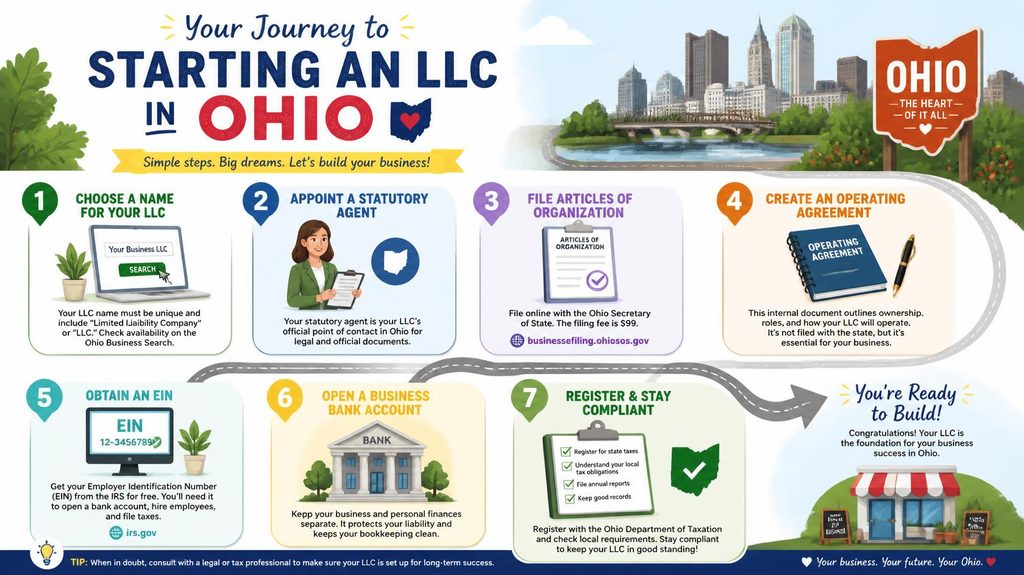
The formation process is easier when you handle each requirement in order. Ohio’s state filing is only one part of launching the business correctly. These seven steps cover formation and the practical tasks that usually follow.
1. Choose a Name That Meets Ohio’s Rules
Your company name must be distinguishable from names already recorded by the Ohio Secretary of State. It must also contain an approved limited-liability designator. Accepted forms include “LLC,” “L.L.C.,” “limited,” and “limited liability company.”
Check the state’s business records before committing to a name. State availability does not automatically provide federal trademark protection. Consider checking federal trademark records before investing heavily in branding.
A clear name also makes future marketing easier. NewsParq’s coverage of website design and business branding explains why naming and digital identity deserve early attention. Your legal name and public-facing brand should work together where possible.
2. Appoint an Ohio Statutory Agent
Ohio uses the term statutory agent for the person or entity receiving legal notices. Every domestic limited liability company must appoint one during formation. The appointment is included with the Articles of Organization.
An individual agent must reside in Ohio. An eligible business agent must have an Ohio address. The official instructions prohibit standard post-office boxes and commercial mailbox addresses for this purpose.
Choose someone who can reliably receive important documents. Missing legal notices can create serious problems for a business. Ohio can eventually cancel an entity that fails to maintain a statutory agent after required notice.
3. File Articles of Organization
You create the company by filing Articles of Organization with the Ohio Secretary of State. Domestic businesses use Form 610. The standard filing fee is currently $99.
The filing includes your company name and statutory agent information. You may also provide an optional purpose statement. Ohio permits a delayed effective date within the limits stated on the form.
Online filing is available through Ohio’s business filing system. Mail and other filing methods are also available. Processing speed depends on the filing method and workload, while paid expedited options are available.
4. Create an Operating Agreement
An operating agreement explains how your company will operate internally. It can address ownership, voting rights, management responsibilities, distributions, and member departures. Even a single-owner business can benefit from documenting these rules.
The agreement can also help separate personal and business affairs. Banks or other parties may ask for governance documents during certain transactions. Store the signed agreement with your permanent company records.
Multi-member businesses should give this step extra attention. Clear rules can reduce disagreements about authority or money later. Legal advice can be worthwhile when ownership arrangements are complicated.
5. Apply for an EIN When Needed
An Employer Identification Number is a federal tax identifier issued by the IRS. Businesses commonly use one for payroll, banking, and federal tax administration. The exact requirement depends partly on ownership and tax treatment.
A single-member business without employees may not always need an EIN for federal income-tax purposes. The IRS explains several exceptions and practical reasons to obtain one. Banks may also request an EIN before opening a business account.
Keep the IRS confirmation with your formation records. Avoid confusing the federal EIN with Ohio registrations or local licenses. Each serves a different administrative purpose.
6. Open Separate Business Financial Accounts
Separating business money from personal money improves recordkeeping. It also makes income, expenses, and tax records easier to track. Bring your formation documents and identification when opening an account.
Use the business account for company revenue and expenses. Avoid paying routine personal costs from company funds. Consistent financial separation supports cleaner records throughout the year.
New companies should also establish basic bookkeeping early. You can choose accounting software or work with a qualified professional. Starting with organized records is easier than reconstructing transactions later.
7. Check Licenses, Taxes, and Local Rules
Creating the entity does not automatically satisfy every operating requirement. Your industry or municipality may require additional permits or registrations. Requirements can differ between cities and business activities.
Tax obligations also depend on how the company operates and chooses federal tax treatment. A single-member entity receives different default federal treatment from many multi-member entities. The IRS can also recognize certain elections that change tax classification.
Build compliance into your broader business planning. NewsParq also covers online business marketing practices and business technology infrastructure. Those resources can help once formation paperwork is finished.
How Much Does an Ohio LLC Cost?
The required state formation fee is $99 for domestic Articles of Organization. That is the main mandatory Secretary of State cost for standard formation. Optional services can increase your total startup expense.
| Expense | Typical Requirement |
| Articles of Organization | $99 required state filing |
| Statutory agent | Free if eligible owner serves, otherwise provider cost varies |
| Operating agreement | Cost varies if professional help is used |
| EIN | IRS application itself does not require a formation-service purchase |
| Expedited processing | Optional additional state fee |
| Licenses and permits | Varies by location and industry |
Paid formation companies can charge additional service fees. Those charges are separate from Ohio’s filing fee. You can file directly with the Secretary of State if you prefer handling the paperwork yourself.
Does Ohio Require an Annual LLC Report?
Ohio does not require a general annual report from standard limited liability companies. This differs from many states that require yearly or biennial entity reports. Ohio’s Secretary of State specifically warns businesses about misleading annual-report solicitations.
That does not mean you can ignore ongoing compliance. Your statutory-agent information should remain accurate, and applicable licenses must stay current. Tax and local obligations can also continue after formation.
Be cautious with official-looking business mail. Ohio warns about solicitations involving certificates and unnecessary filings. Verify questionable notices through the Secretary of State before paying them.
Do Ohio LLCs Still Need to File a BOI Report?
A domestic company created in Ohio currently does not need to file federal beneficial ownership information solely because it is a U.S. company. FinCEN finalized this exemption in August 2026. The final rule permanently removed BOI reporting requirements for U.S. companies and U.S. persons.
This rule matters because older startup guides may still describe mandatory BOI deadlines. Those instructions can now be outdated for domestic companies. Certain foreign entities registered in the United States remain subject to separate rules.
Federal reporting rules can change again through legislation or regulation. Check FinCEN guidance when forming or restructuring a company. Current official guidance should take priority over older articles.
Common Ohio LLC Mistakes to Avoid
Formation errors often come from overlooking small administrative details. A rejected name or invalid statutory-agent address can delay approval. Mixing personal and company finances can create unnecessary accounting problems later.
Watch for these common issues:
- Filing under a name that is not distinguishable.
- Using an ineligible statutory-agent address.
- Forgetting to update the statutory agent after a change.
- Treating state formation as a substitute for required licenses.
- Paying unnecessary companies for government forms.
- Following outdated BOI reporting instructions.
- Operating without clear ownership or management rules.
Ohio has also warned businesses about misleading compliance solicitations. Some mailings charge far more than official fees for documents owners may not need. Confirm government requirements using official sources before paying unfamiliar invoices.
What to Do After Your Filing Is Approved
Save your approved formation documents in a secure business-records folder. Add your operating agreement, EIN confirmation, licenses, and important tax documents. Keep electronic backups where appropriate.
Next, establish your banking and bookkeeping procedures. Confirm any state, county, and municipal requirements before beginning regulated activities. Businesses with employees should also address payroll and employment obligations.
Finally, create a simple compliance calendar. Include tax deadlines, license renewals, insurance reviews, and agent-information checks. Ohio’s lack of a general annual LLC report does not eliminate these other responsibilities.
Start With the Official Filing Requirements
Ohio offers a relatively simple state formation process. The filing starts with a compliant name, statutory agent, Articles of Organization, and the $99 state fee. Completing the post-formation steps creates a stronger operational foundation.
Use official Ohio and federal sources whenever fees or regulations matter. Professional legal or tax advice can also help when your situation involves multiple owners, employees, or unusual tax questions.
Frequently Asked Questions About LLC Ohio Formation
How much does an LLC cost in Ohio?
The standard domestic Articles of Organization filing fee is $99. Optional expedited processing or professional services can increase your total cost. State and local licensing expenses depend on your business activities.
How long does it take to form an Ohio limited liability company?
Processing times can vary with submission method and workload. Ohio also provides optional expedited filing services for additional fees. Filing online can reduce mailing delays.
Do I need a statutory agent in Ohio?
Yes. Domestic limited liability companies must appoint and maintain an eligible statutory agent. The agent must meet Ohio’s residency or business-address requirements.
Does Ohio require an operating agreement?
An operating agreement is an important internal governance document, especially for multi-member companies. It can define management, voting, ownership, and distribution rules. Consider professional legal guidance when the ownership structure is complex.
Does an Ohio company need an EIN?
Many businesses need or choose to obtain an EIN. Employees, federal tax requirements, and banking needs can affect that decision. The IRS provides specific rules for single-member entities.
Does Ohio require annual reports for LLCs?
Standard Ohio limited liability companies do not file a general annual report with the Secretary of State. Businesses must still maintain applicable records, licenses, taxes, and statutory agent information.